
PHOTO
Cowra’s new hospital is preparing to open its maternity unit, with staff completing the final stages for the move.
The upgraded unit brings modern birthing facilities, specialised neonatal care and a uniquely designed Aboriginal cultural courtyard that reflects local stories and honours traditional birthing practices.
Health service manager Pauline Rowston provided a detailed walkthrough of the soon to open maternity and perioperative spaces, highlighting how the new facilities will improve comfort, safety and cultural connection for families across the region.
The birthing rooms feature large showers with dual rose fittings, modern design and space created intentionally for single, low risk pregnancies, which make up the majority of Cowra’s maternity cases.
Each maternity room also includes its own ensuite, contemporary layout and access to cultural spaces that support calm, comfort and connection.
A key addition to the new maternity unit is a neonatal nursery, giving staff the ability to stabilise premature or unwell babies before specialist retrieval teams arrive.
“We now can take small bubs for stabilisation,” Ms Rowston said.
“Facilities in the city will connect and tell us right away, so we can stabilise until the helicopter arrives.
“Then we can ship them where they need to be.”
Cowra can safely stabilise babies from 37 weeks and above.
Babies born earlier than that will still be transferred to larger hospitals equipped for neonatal intensive care, but the new unit allows better emergency preparation and faster response.
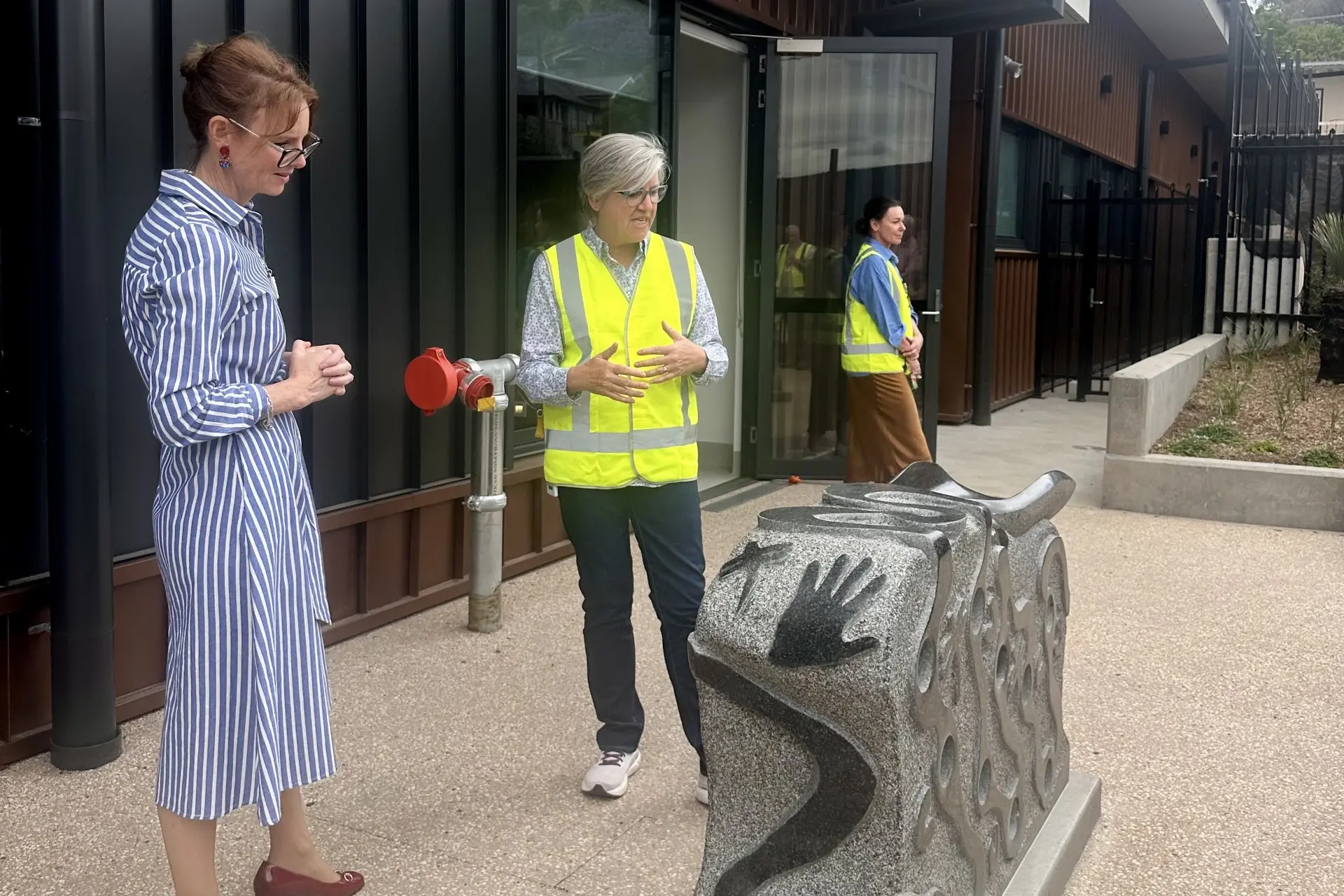
One of the most significant features of the new maternity space is the Aboriginal cultural courtyard, centred around an original artwork and sculpture designed specifically for Cowra Hospital.
The work was created by sculptor Ken Hutchinson, long serving Cowra midwife Helen Isaacson, and Aboriginal community leader Diyan Coe.
The sculpture incorporates handprints, river symbolism and birth related motifs that honour local Wiradjuri traditions.
“It helps create an environment for Aboriginal patients to feel a connection to country,” Ms Rowston said.
“Birthing on country is really important for them.”
Key design elements include circle patterns representing the Lachlan River, dragonflies, which traditionally appeared near river birthing sites and were considered a sign of safety, coloured glass inserts, which are still being completed, that will cast light through the sculpture, handprints representing midwives, artists and a seven week old baby, and a granite lower back support stone for women to lean against during early labour to relieve pain.
“When women are in early labour, there’s often really bad lower back ache, this piece of granite gives you really nice lower back relief,” Ms Rowston said
The courtyard will also feature a beautiful wooden coolamon, allowing Aboriginal women to take photographs and celebrate new births connected to country.
From original artwork and culturally safe spaces to advanced neonatal capabilities, the new maternity unit is designed to be both clinically modern and emotionally supportive.
Ms Rowston said the overall goal is to create familiarity and comfort.
“It’s a really nice opportunity for the ladies who are pregnant or going to birth here to meet midwives before they come in,” Ms Rowston said.
“They know the area, they know their midwife, it gives real continuity.”
With final preparations underway, the new maternity facilities are expected to open within days, marking a major milestone for Cowra’s healthcare future.