
PHOTO
Improved seasonal conditions, stronger livestock markets and renewed confidence across the agricultural sector have delivered a welcome turnaround for local producers, according to a new seasonal report from stock and station agent Jack Harper.
In his latest market update, Mr Harper reflected on the dramatic seasonal shift that has unfolded across the region in recent months, describing autumn as a period of major change for both producers and livestock markets.
“With blog number four comes a change in season. Just like that, autumn has been and gone,” Mr Harper said.
“June, and with it, the start of winter, marks for me my first full season since returning to life back down under.”
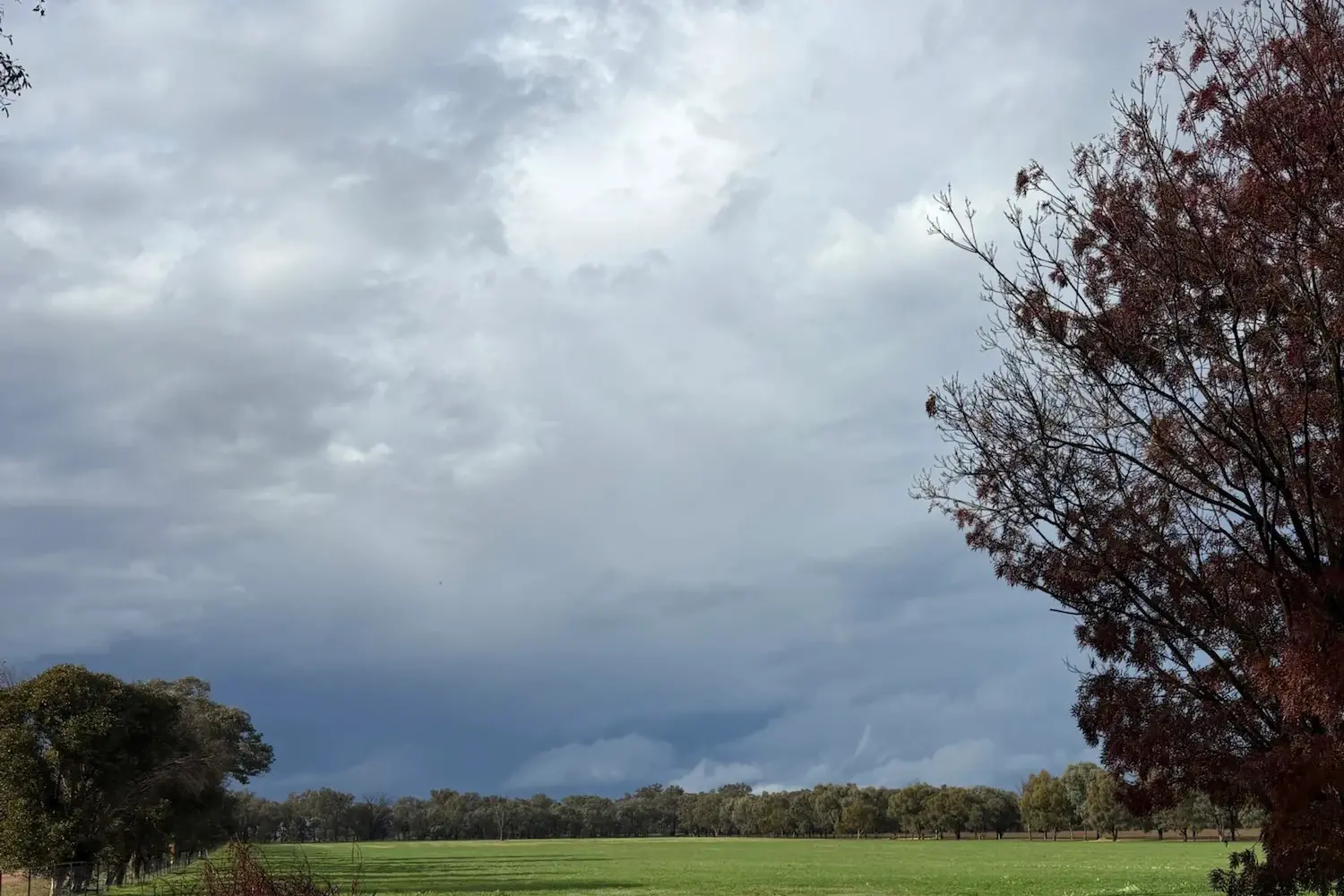
Mr Harper said conditions across the countryside looked vastly different compared with only a few months ago.
“Some season it has been,” he said.
“The countryside indeed has a stark contrast to what feels like a lifetime ago back in March.”
At the beginning of May, uncertainty remained high among producers as dry conditions persisted and concerns continued to grow around feed availability, livestock supply and rising market prices.
“May began much like the rest of autumn, where the questions on everybody’s mind were: when will the rain come, will the numbers of stock dry up, and will the market get dearer again?” Mr Harper said.
However, as the month progressed, those concerns began to ease as rainfall arrived across large parts of the state and livestock markets strengthened.
“As the month progressed, I would say we were gifted with a positive response for each of the burning questions that everybody was searching for an answer to,” he said.
Mr Harper said May brought clear improvement in both lamb and beef markets after a challenging start to the season.
“Through the weeks that were May, there was indeed a clear improvement in both the lamb and beef markets,” he said.
Cattle numbers remained high early in the month, particularly as producers continued turning off cows, though those figures gradually declined as seasonal confidence improved.
“May started with big numbers of cattle continuing to come through the system, most of which was driven by cows being turned out load after load,” Mr Harper said.
“As the weeks progressed, the numbers were starting to slow up, by no means were they gone, but they certainly slowed.”
He pointed to yarding figures at the Central Tablelands Livestock Exchange as a sign of the changing market, with cattle numbers falling significantly throughout the month.
“The first prime sale of May at CTLX saw close to 3700 head yarded, which by the end of May reduced back to 2000,” Mr Harper said.
As supply eased, prices began moving upwards.
“As the numbers reduced, prices began to rise,” he said.
“Cows were back out to around 400c/kg, and feeder steers consistently were bringing over $5 to $5.20 again.”
Mr Harper said demand for younger cattle remained particularly strong and expected that trend would continue.
“Young cattle are well sought after at the moment, which I suspect will continue to be the trend for the foreseeable future,” he said.
Rainfall across much of New South Wales was a major driver behind the renewed confidence, according to Mr Harper, helping to improve pasture growth and restore optimism after difficult conditions earlier in autumn.
“This was very much thanks to much-welcomed rain, not just in our district but very widespread throughout New South Wales,” he said.
“With rain comes regained confidence.”
While many producers had already sold stock during drier periods, rainfall provided reassurance for those still carrying livestock through winter.
“Plenty of stock had already been turned off, but for what was left, there was again hope, knowing that the feed would once again begin to grow,” Mr Harper said.
“It was very much Goldilocks rain for many.”
“It couldn’t have come at a better time.”
The rainfall also proved critical for cropping programs and water supplies, particularly after crops had begun showing signs of stress.
“Crops were sown and germinating thanks to some earlier rain in our parts but were indeed starting to look in dire need of another shower,” he said.
Groundwater and stock water shortages had also become a major concern for many producers, something Mr Harper said recent rainfall helped address.
“A major issue for many of our producers has been the issue of groundwater,” he said.
“When the heavens opened up, they continued to bring rain in steady showers, allowing for some much-needed runoff to fill stock dams again.”
The sheep and lamb market also remained exceptionally strong throughout May, with tighter supply helping maintain buoyant prices heading into winter.
“With much appreciated rain and a quickly approaching winter, the lamb numbers are gradually starting to deplete across the district,” Mr Harper said.
“With that, the lamb job holds no option but to remain extremely buoyant.”
Heavy lamb prices continued performing strongly during the month.
“Throughout the month, heavy lambs were still bringing carcass weight prices well past 1100 to 1150c/kg,” he said.
“Trade lambs are also still holding their strength, with prices seen right out touching $13/kg cwt.”
Mr Harper expects lamb numbers to continue declining over coming months until new season suckers begin entering the market.
“As the year quickly accelerates in the third quarter, I expect to see the numbers of lambs available to market become less and less until we see the first of the suckers,” he said.
He said young lambs across the district were currently presenting in strong condition thanks to favourable feed and seasonal conditions.
“All those around the district have looked in great condition,” Mr Harper said.
“On more than one occasion, I’ve heard this autumn be referred to as the best in a good while.”
“With that, the suckers shouldn’t have too many chances to take a backwards step and will be well and truly on the go for now.”
Looking more broadly at the agricultural sector, Mr Harper said there was growing optimism surrounding Australian agriculture and the red meat industry.
“I think it’s fairly safe at the moment to say that there is plenty of excitement surrounding the red meat industry and Australian agriculture as a whole,” he said.
“Blessed with magnificent rain, ever strengthening markets, and relatively warm, feed growing weather.”
At the same time, he acknowledged how quickly fortunes can shift in agriculture.
“It’s both amazing and frightening in a sense how quickly things can change in our industry,” Mr Harper said.
“And I guess that’s what keeps us all so very entertained.”
As winter begins, Mr Harper said conditions remain promising for producers across the district.
For more information, visit theinternationalauctioneer.wordpress.com