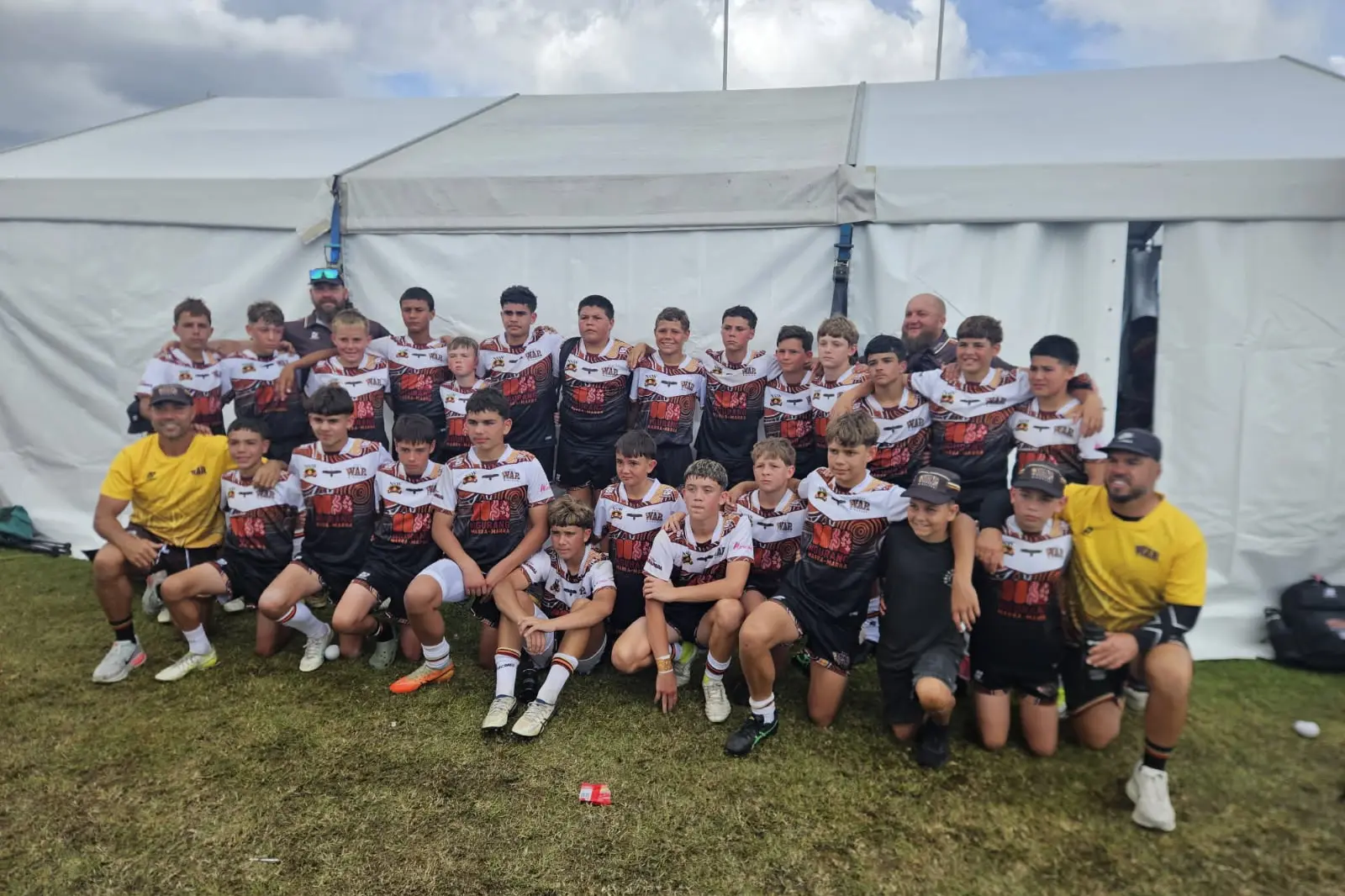
The Wiradjuri Aboriginal Rivers Under 13s rugby league team has fallen just short of Koori Knockout glory, reaching the grand final against Newcastle in an impressive campaign that brought together young Aboriginal players from across NSW. Despite suffering defeat in the decider, the team's achievement was made even more remarkable by the limited time the players had spent together before taking on some of the state's strongest junior rugby league talent. With just four days in camp and some players meeting for the first time only days before the tournament, the Wiradjuri Aboriginal Rivers side quickly developed the teamwork and determination needed to reach the grand final. Coach Will Ingram said he was extremely proud of the players, particularly given how little preparation time they had together. "Extremely proud." "We brought together kids from across the state, and only had them for a short period of time, but the way they gelled was really, really good," Ingram said. "They got to spend the four days in camp with each other, getting to know everyone, really focusing on relationships and everything. "It's a big effort for four days worth of football, and only knowing some of the kids for five days." The young side demonstrated its ability throughout the tournament, overcoming the challenges of playing alongside unfamiliar teammates to secure a place in the championship decider. Ingram credited the players' willingness to learn, adapt and support one another as the driving force behind their success. "Just the ability for all the players to adapt to what's asked of them at the time, their willingness to learn, and their overall talent within the squad was really good," he said. However, it was the relationships formed away from the football field that left one of the biggest impressions on the coach. "Just how much they bonded," Ingram said. "There was a lot of kids that never knew each other three days before, and then all of a sudden you couldn't keep them apart after two days." That connection was evident in the grand final against Newcastle, where the Wiradjuri Aboriginal Rivers players refused to give up despite a difficult start. Although Newcastle ultimately claimed the victory, Ingram said his players fought their way back into contention and remained competitive until the closing stages. "They gave their all right up until the last minute, and it came down to the last two minutes before it was decided," he said. "They didn't start the best, but they fought their way back into it, showing their resilience and tenacity." While the players were disappointed to fall short of the championship, Ingram believes the experience will provide valuable motivation for their future development. He said those remaining in the Under 13s age group would have an opportunity to build on the campaign next year, while players progressing into older divisions could use the experience to prepare for new challenges. "It'll be a big driving point for kids that stay in that age group for next year, and it'll spur the kids on that are going up into the higher age group for next year to try and improve and be ready for that again," he said. Beyond the results, the Koori Knockout provided the young players with an opportunity to strengthen their connection to culture, family and the wider Aboriginal community. Ingram said the tournament held enormous significance for the Wiradjuri Aboriginal Rivers community, particularly for children who may only have opportunities to reconnect with extended family during the annual event. "It's massive," he said. "Some of these kids don't get to see families until knockout time that year. "Us at WAR, we pride ourselves on focusing on community and cultural values." Throughout the tournament, the team shared meals, travelled together and participated in cultural activities designed to strengthen relationships and create a sense of belonging. One of the highlights was a corroboree held on Saturday afternoon, with all the young players involved. "We had a big corroboree on the Saturday afternoon," Ingram said. "All the kids were involved. "We travelled together. "We ate breakfast together. "Had dinner together, so it was really about immersing ourselves in that connectedness through footy and through the culture of what we're doing within the WAR family, the WAR community." The importance of those connections extended beyond the junior squad. Ingram recalled one particularly meaningful moment when a trainer from the men's team discovered a family connection with an Under 13s player he had never previously met. The pair learned they were cousins through the trainer's mother's side of the family, highlighting the opportunities the tournament creates for Aboriginal families to reconnect. For Ingram, moments like these were just as important as the team's performances on the field. He said rugby league provided an opportunity to bring people together, but the relationships and cultural connections developed through the experience would have a much longer lasting impact. "Football's a big vehicle for people to come together," he said. "But it's the need and the want for them to come together and experience that, and really take it all in." The tournament also gave the young players their first taste of the expectations and responsibilities involved in a representative football environment. Spending several days away from their parents, the players learned to adapt to camp routines while receiving support from coaches, trainers and other members of the Wiradjuri Aboriginal Rivers community. Ingram said the experience demonstrated the importance of having people around the players who could provide encouragement and guidance while they were away from home. "They had other people coming in and being like surrogate family members and looking after them while they were in the camp," he said. He hopes the experience will inspire some of the young players to pursue further opportunities in rugby league, having gained an understanding of what is required to compete at a representative level. However, he acknowledged that not every player would necessarily have another opportunity to experience a tournament of this nature. For that reason, Ingram said the greatest achievement was ensuring the players could take something meaningful away from their time together. "Some of these kids may get this opportunity again," he said. "Some of them may not. "It's giving them the chance to have that opportunity. "That's probably the biggest positive for me." Although the Wiradjuri Aboriginal Rivers Under 13s returned home without the championship trophy, their grand final appearance remains an outstanding achievement for a team brought together in just a matter of days. For the young players, the campaign delivered more than a place among the tournament's best sides, providing new friendships, cultural connections and valuable experience that could shape their futures both on and off the football field.