
PHOTO
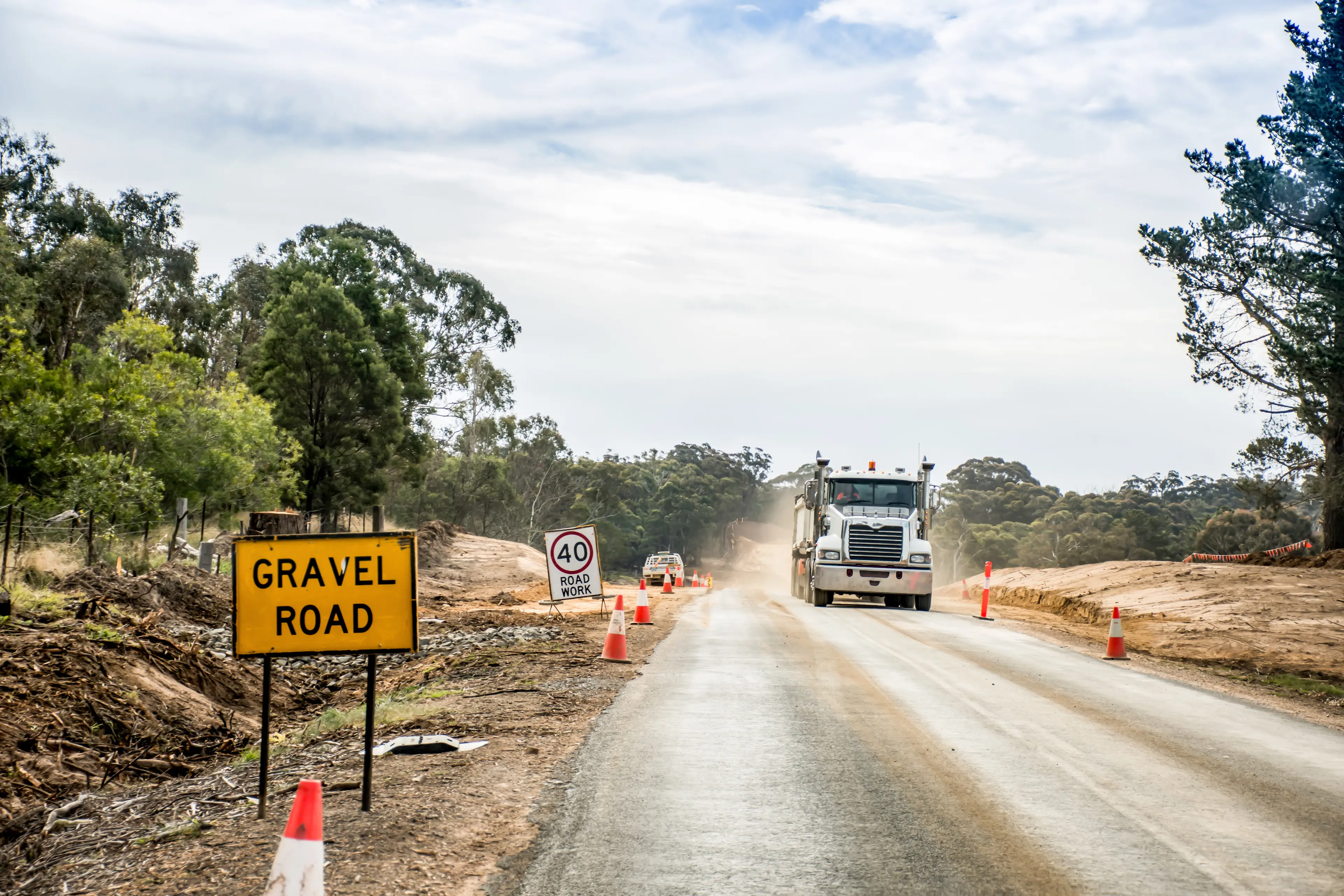
Roadworks with Gravel road sign and 40 km h speed limit sign in Australia. Road repair
Cowra Shire Council has recorded strong overall community satisfaction across a broad range of services and facilities, according to the results of the 2026 Community Satisfaction Survey, though concerns around the condition of rural roads continue to dominate resident feedback.
Presented to Council at its June General Committee meeting, the survey found overall satisfaction with Council performance had slightly improved since 2023, with Cowra continuing to outperform comparable regional councils across most service areas.
The survey, which included interviews with 300 adult residents across the Cowra local government area between 16 March and 1 April, found 17 of the 19 facilities and services measured received satisfaction ratings at or above the neutral midpoint of 3.0 out of five.
Areas including sewer services, the Regional Library, parks and gardens, the Regional Art Gallery and the Civic Centre emerged as the highest-rated services, while customer service and community engagement also recorded measurable improvement.
Despite the positive results, dissatisfaction with road conditions, particularly rural roads, remained the most significant issue identified by residents.
Deputy Mayor Councillor Nikki Kiss thanked community members who participated in the survey, describing the feedback as essential to improving Council services.
“I'd like to begin by actually thanking all of the constituents who completed the survey."
"It's very appreciative of their efforts,” Cr Kiss said.
“Look, I see these sort of surveys as an opportunity for us to work out how and how we can actually improve our services.”
Cr Kiss said honest feedback, including criticism, played an important role in shaping future decisions.
“Nobody likes to hear that you're not doing something as well as what you'd hoped, but there is no way that we can improve unless we receive that honest feedback,” she said.
Council’s overall satisfaction score increased slightly from 3.32 in 2023 to 3.37 in 2026, remaining above the average of comparable regional New South Wales councils.
“It is good to see that Cowra Council achieves a higher benchmark of satisfaction than the average comparable councils,” Cr Kiss said.
“We know we're headed in the right direction.”
While satisfaction levels improved compared with the 2023 survey, Cr Kiss said the results reflected Council’s ongoing commitment to improving services.
“Honestly, it's nothing more than I'd expect though,” she said.
“Whenever we can do better, well, we should.”
The survey also identified healthcare access, active lifestyles and a safe, vibrant community as the issues residents considered most important.
“The healthcare and safe community, as we were just discussing, and a safe, vibrant community are deemed to be of the highest importance to our constituents,” Cr Kiss said.
“What that says to me is that people want to feel a safe place to call home.”
She said the results reflected the strong sense of belonging many residents feel in Cowra.
“We all pride ourselves on that sense of belonging here in Cowra, and it's good to see that across our constituents they have the same thoughts for wanting to feel like they belong in this place,” she said.
Councillor Erin Watt praised Council staff and the survey process, particularly efforts to ensure the Wiradjuri and First Nations community was properly represented.
“One of the most fascinating things to me was the massive drop in people who wanted pamphlets in their mailbox,” Cr Watt said.
“But particularly, I wanted to highlight and congratulate the staff and the people we worked with to develop this on the really great efforts to ensure that the Wiradjuri and First Nations community was adequately represented.”
Cr Watt said Council had successfully matched Indigenous representation in the survey to the percentage of Aboriginal and Torres Strait Islander people living in the local government area.
“We highlighted in 2023 that the First Nations community wasn't represented in the same way, but we've met here exactly the percentage of our community that identify as Indigenous,” she said.
“I think that's really important for making sure the information we get in this survey is reflective of our community.”
Community facilities and cultural spaces also performed strongly in the survey, with increased visitation to recreational infrastructure and local attractions.
“It was really fantastic to see an increase in satisfaction and visitation for our cultural facilities, as well as our recreation facilities,” Cr Watt said.
“Congratulations to the Art Gallery, who have a 27 per cent increase in people claiming to have visited.”
Cr Watt said survey results also showed more than half of residents had visited a playground in the past year, highlighting strong multi-generational community engagement.
“I was particularly fascinated to see more than half of our population have used a playground at least once in the past year,” she said.
“I think that's a really interesting insight into how our community engages.”
However, despite positive feedback across most service areas, roads remained a clear priority for residents.
Survey findings showed rural roads recorded the lowest satisfaction level of any service measured, with only 25 per cent satisfaction, compared with 33 per cent for town and village roads.
“As was highlighted by Councillor Kiss, roads are highlighted here as a focus for us to take on from our community,” Cr Watt said.
She said Council had recently committed to improving road quality using increased federal funding, including a greater focus on sealing roads and wider carriageways to improve longevity.
“We're very grateful that the federal government has started a massive increase in our funding,” Cr Watt said.
“I'm also really proud that we as a council have taken the decision to utilise that increased funding to invest in better quality roads than we're doing them.”
“Making sure we're looking at tarring, looking at wider carriageways, which we know when we've got this opportunity of increased funding, will mean those roads are going to last longer and we can get a bit more bang for our buck long term.”
Footpaths also emerged as an area of increasing concern, with satisfaction declining while importance increased.
Cr Watt said this reflected concerns raised by residents and may influence future planning.
“We also had footpaths start up as an area of concern,” she said.
“That's reflective of conversations I've had with some members of the community recently.”
Another major theme identified in the survey was a growing community desire for consultation and communication from Council.
Cr Kiss said while communication had improved, there was still more work to be done.
“People aren't always dissatisfied about what Council is doing,” she said.
“It's more that they don't necessarily understand.”
“We like to know why things are done, or why decisions are made.”
Cr Watt agreed, saying stronger consultation would remain important as Council continues to deliver major projects.
“We have improved our communication outward, but that's very different to consultation with our community and involving them early on in development,” she said.
“This council often does a lot of really good things, and our community isn't always aware of it, or can raise things that we haven't considered.”
She pointed to past consultation efforts, including CBD activation discussions and public engagement activities, as examples of strong community participation.
“We can be scared that they're going to just be negative, but often they aren't,” Cr Watt said.
“Often they're really proactive.”
While rural roads remain a key challenge, Councillors said the survey overall painted a positive picture of community confidence in Council and provided valuable direction for future priorities.
“I feel very positive about the survey as a whole,” Cr Kiss said.
“I look forward for us continuing to improve, and once again, thank you to the constituents for their feedback.”