
PHOTO
The Cowra Prisoner of War Camp was constructed in 1941 and 1942 to house Italian prisoners of war captured by Allied forces during World War II.
The site comprised four prison camps covering more than 30 hectares and accommodating more than 4,000 prisoners, including Japanese, Italian, German, Indonesian and Korean detainees.
On 5 August 1944, more than 1,000 Japanese prisoners of war launched a mass breakout from the Cowra POW Camp.
The escape resulted in the deaths of four Australian soldiers and more than 200 Japanese prisoners.
It remains one of the largest prisoner-of-war escapes of the Second World War.
However, it was the events that followed the breakout that helped forge a unique and enduring relationship between Australia and Japan.
Cowra Breakout Association Media Officer Lawrance Ryan reflected on the significance of the site during commemorations marking the event's anniversary. He outlined how Cowra transformed a tragic wartime incident into a powerful symbol of international friendship and reconciliation.
"It truly was here in Cowra, in the immediate aftermath of World War II, that some of the first acts of reconciliation and understanding occurred between what had been the bitterest of enemies during the war," Mr Ryan said.
According to Mr Ryan, the foundations of the Cowra Breakout Association were laid by Australian servicemen who had fought against the Japanese and later returned to care for the graves of those who had died during the breakout.
"Rather than seeing them as a hated enemy, they saw them as fellow soldiers who were doing their duty," he said.
"Looking after their graves was simply the right thing to do."
Over the decades, Cowra's commemoration of the breakout has evolved from the remembrance of a wartime tragedy into a celebration of reconciliation, cultural understanding and international friendship.
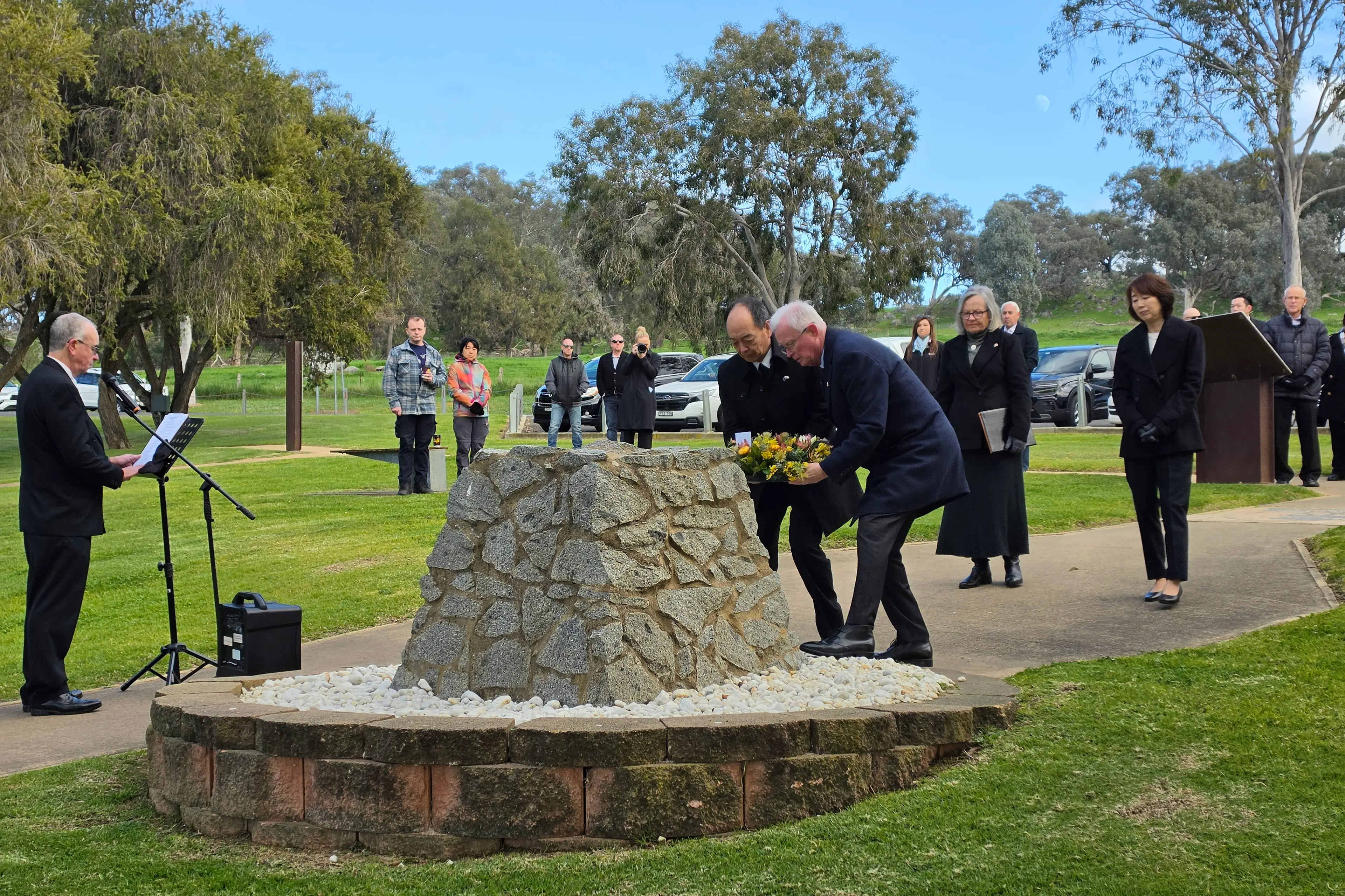
Representatives attending this year's anniversary paid tribute to those who lost their lives while also acknowledging the strong relationship that has developed between Australia and Japan since the conflict.
The ceremony also recognised the experiences of Italian prisoners of war held at Cowra.
Benedetta Parasmo provided an interpretation of the inscriptions on the Australia-Italian Friendship Memorial, which was established in 1997.
Ms Parasmo's father, Cosmo Parasmo, was an Italian prisoner of war interned at Cowra between 1941 and 1946.
She has worked extensively with historical records, including photographs and service documents from the Australian War Memorial, along with her father's personal account of his experiences.
These materials were presented to the Cowra and District Historical Society in 2021.
The recent anniversary served not only as a remembrance of the past but also as a celebration of the enduring partnership between Australia and Japan, built on peace, friendship and a shared commitment to a better future.