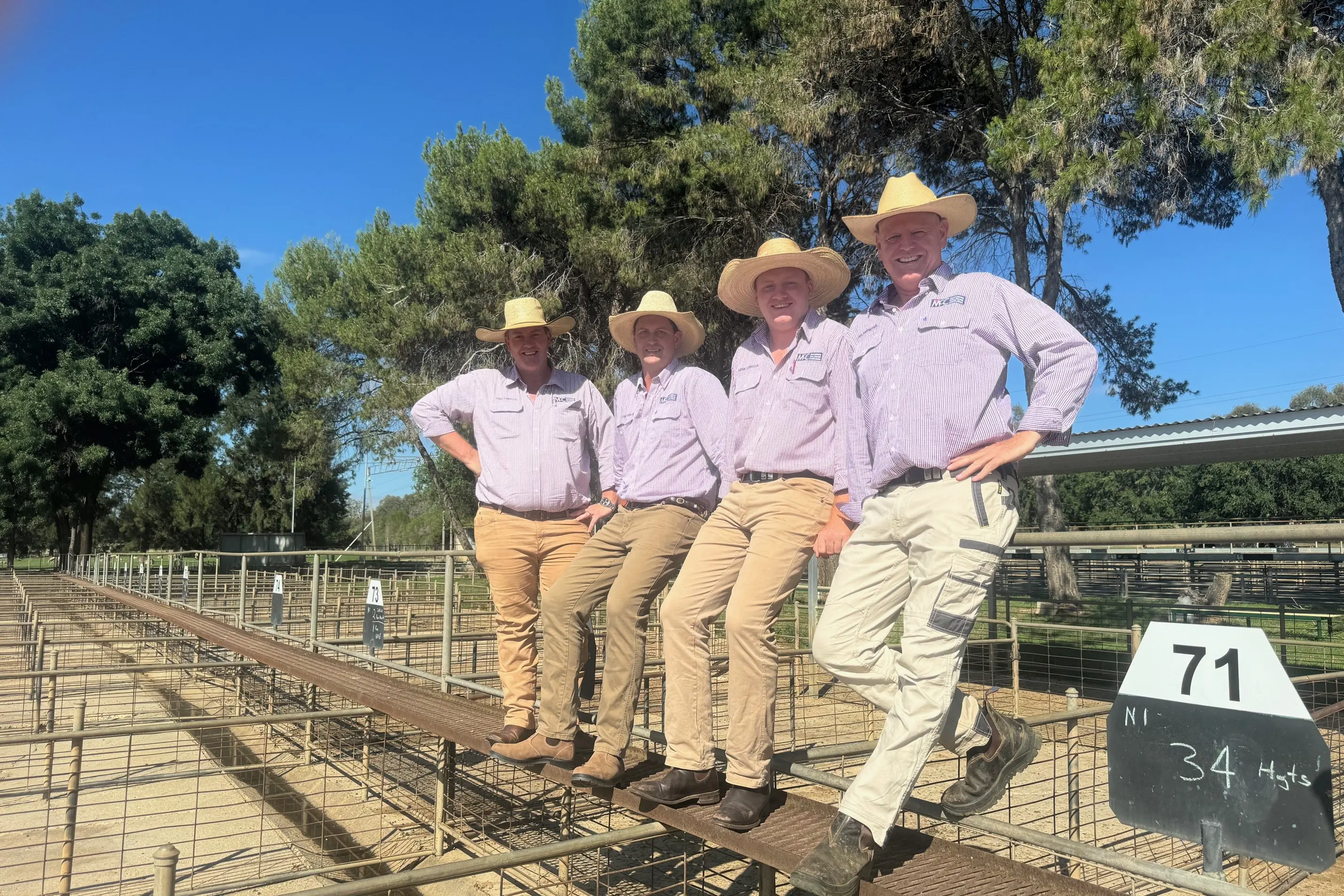
Cowra's sheep and lamb market has maintained strong momentum throughout October and into November, with improving competition, rising prices and several standout sales delivering encouraging results for local livestock producers. Across four weekly sales between 7 October and 4 November, thousands of lambs and sheep passed through the Cowra saleyards, with demand for trade, heavy and feeder lambs remaining largely positive despite fluctuations in yardings and livestock quality. MCC Howard Oliver stock and station agent Craige Oliver reported a particularly strong finish to October, when an exceptional pen of sucker lambs reached $400 a head, before the market continued to deliver solid returns during the first sale of November. The 28 October sale provided one of the month's major highlights, with M&C Sutherland achieving the top market price of $400 for a pen of 89 sucker lambs. The vendor's second draft lambs also attracted strong competition, selling for $370 a head and demonstrating the premiums available for well-presented, quality livestock. Mr Oliver described the heavier lambs offered that week as particularly impressive. "There's some exceptional lambs there," he said. Heavy lambs sold from $320 to $400 a head, with prices generally eight to 10 cents a kilogram dearer than the previous sale. Mr Oliver said the market continued to reward quality, although the availability of exceptional heavyweight lambs remained limited. "They're short of those real good heavy lambs," he said. The sale attracted approximately 4,500 lambs and 1,500 sheep, with light and feeder lambs selling between $160 and $260 a head. Trade lambs returned between $270 and $320, with prices holding firm and selected pens exceeding $12 a kilogram. The sheep market also remained relatively stable, with heavy sheep selling from $270 to $315 and lighter categories generally returning between $150 and $265. Mr Oliver said the market was largely unchanged despite some of the very heaviest sheep easing slightly. "Your real super, super heavy sheep, maybe a fraction cheaper, but all in all, they're near enough to firm," he said. Sheep prices generally averaged between $8.50 and $8.80 a kilogram, with selected lines exceeding $9. The positive momentum continued into the November 4 sale, when approximately 5,000 lambs and 1,300 sheep were yarded. Mr Oliver reported stronger competition for lighter and feeder lambs, with prices improving by five to 10 cents a kilogram. Light and feeder lambs sold from $200 to $280 a head, with the upper end of that range becoming increasingly common for suitable feeder lines. "Some of those feeder lambs there up to the $270s and $280s. Pretty common theme there," he said. Trade lambs sold between $270 and $310, with prices generally firm to five cents a kilogram dearer. Heavy lambs returned between $305 and $384, with the market maintaining solid demand despite the absence of the exceptional heavyweight pens seen the previous week. Mr Oliver described the offering as a useful yarding of lambs, including stock drawn from cooler country. "It's pretty handy lambs there today too, out of the cooler country," he said. Returns for trade and heavy lambs were reported between approximately $11.20 and $12.22 a kilogram, highlighting continued competition for well finished stock. The sheep market also produced some impressive results, with heavy sheep selling from $240 to $379.20 a head. The top end of the market included large crossbred wethers, while light and medium sheep returned between $100 and $235. Mr Oliver said sheep were generally trading around $9 a kilogram, reflecting the continued strength of the market. The November result followed several weeks of encouraging trading conditions, with the 7 October sale establishing a positive start to the reporting period. Approximately 4,000 lambs and 1,000 sheep were offered at that sale, with trade lambs selling between $250 and $304 a head. Mr Oliver reported trade lamb prices were generally 10 cents a kilogram dearer, with some isolated sales improving by 15 cents or more. The strongest competition was concentrated on fresh, well finished lambs that met buyers' preferred weight requirements. Heavy lambs sold from $296 to $350, with prices generally five to eight cents a kilogram dearer. Several local vendors recorded notable results, including Mick and Ange Somry, whose sucker lambs reached $350 a head. Jamie Williams achieved $338, while another highlighted sale reached approximately $330 to $332. The sheep market also delivered strong prices, particularly for heavier categories. Heavy sheep returned between $270 and $364.20, with competition between major processors contributing to the stronger results. "A couple of the major processors locked horns there on some big heavy sheep and provided a bit of entertainment for us," Mr Oliver said. Light and medium sheep sold between $160 and $260, with most sheep returning approximately $8 a kilogram. The following sale on 14 October attracted approximately 4,000 lambs and 1,200 sheep. Light and sucker lambs sold between $190 and $260, while trade lambs returned between $270 and $312. Mr Oliver reported that better trade lambs were approximately five cents a kilogram dearer, with selected heavier trade pens exceeding $12 a kilogram. Heavy lambs sold between $300 and $330, generally returning between $10.50 and $11.50 a kilogram. The sheep market was somewhat more subdued than the previous week, with heavy sheep selling between $250 and $320. Mr Oliver noted that the strong processor competition evident on October 7 had not been repeated to the same extent. Heavy sheep above 35 kilograms generally returned between $7.50 and $8 a kilogram, while lighter sheep attracted returns of approximately $8 to $9. Across the four sales, the reports reflected a market where livestock quality and buyer demand continued to influence prices, with producers offering well-finished lambs achieving particularly strong results.