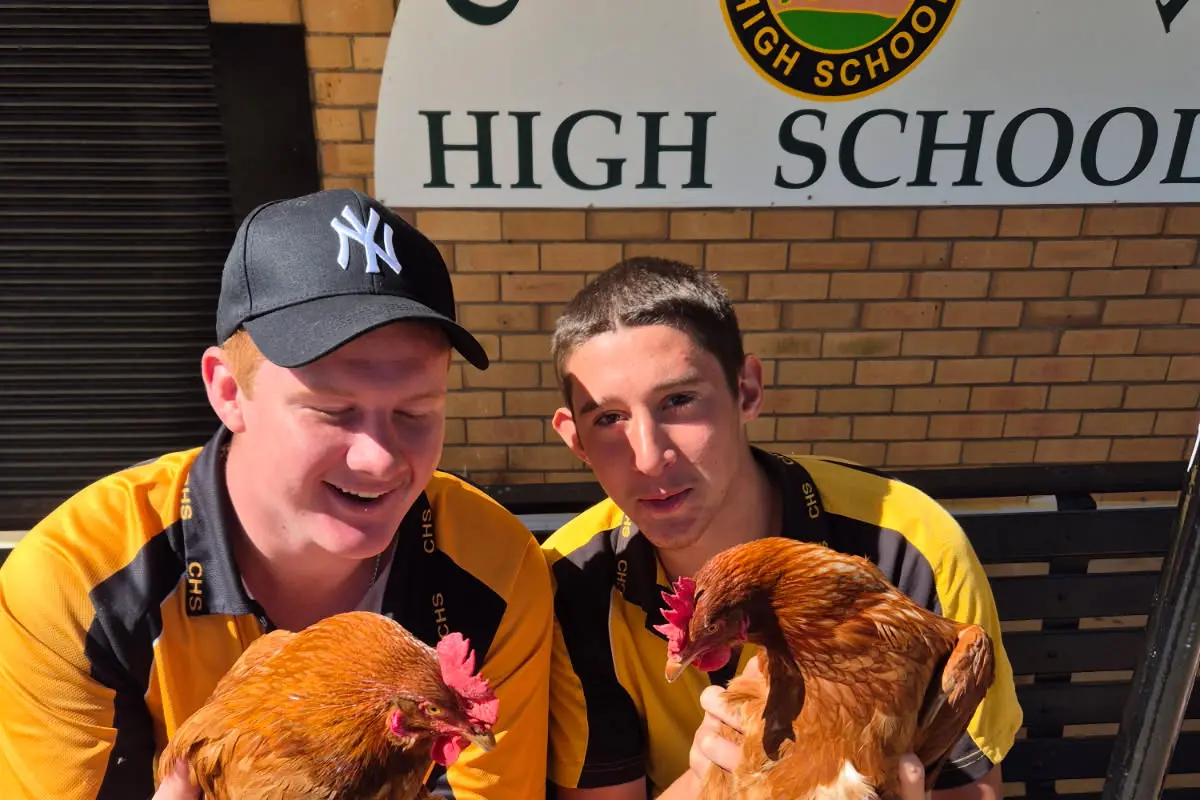
Students at Canowindra High School are learning far more than business basics through their involvement in the Social Enterprise Schools program run by the Australian Centre for Rural Entrepreneurship (ACRE). The initiative is helping students turn their ideas into real enterprises while encouraging them to support their community at the same time. Head Teacher of TAS Tammy Nash said the program focuses on creating young entrepreneurs who are socially aware. "It’s not just about making money," Ms Nash said. "It’s about teaching students that if they succeed in business, they can also give back through their time, products or support for other people in the community." Agriculture teacher Rob Cain, who helps facilitate the project, said students are involved in a wide range of enterprises, many linked to agriculture and food production. Projects include raising lambs for sale, producing meal kits, making leather goods, creating candles and cosmetics and growing produce. One of the school’s standout projects has been a student-run lamb enterprise, which has now become a 'legacy project' passed from older students to younger year groups. “We’ve got a Year 9 student taking over the work started by a Year 10 student from last year,” Mr Cain said. “That’s what we’d really like to see. Students building something sustainable that can continue beyond them.” The lamb project has already attracted buyers from Sydney, with products processed locally before being packaged and transported to customers. Canowindra High School also hosts market days where students design stalls, pitch their products and sell directly to staff and community members through the ACRE app. Last year, students held two school markets featuring everything from cupcakes and flowers to candles, cosmetics and food products. Students also took part in investor-style pitches where community members and business owners offered advice, mentorship and industry support. “We had local people and even people Zooming in from Sydney saying, ‘I can help you source this,’ or ‘I can help you with marketing,’” Ms Nash said. “It’s become a real community effort.” The program currently involves some 40 students across Years 8 to 10, with numbers expected to grow to nearly 50 later this year. Students are encouraged to pursue ideas they are genuinely interested in, with projects shaped around available resources and infrastructure. “The biggest thing is that it’s student-led,” Mr Cain said. “If a student comes with an idea, we sit down and work out if we can make it happen.” Both teachers said the initiative teaches valuable life skills including confidence, teamwork, budgeting, time management and resilience. “It gives students the opportunity to fail safely and learn from it,” Mr Cain said. “If something doesn’t work the first time, they learn to keep improving instead of giving up.” The project also has a strong community focus, with students donating products such as eggs and pumpkins to local organisations and supporting causes chosen by the students themselves. The initiative is supported by the Sally Foundation, which provides funding to help students buy materials and launch their businesses. “That support makes a huge difference,” Ms Nash said. “It allows students to get their ideas off the ground.” The school hopes the program will continue to grow and inspire more young people to stay connected to rural communities after school. “We want this way of thinking to become normal,” Mr Cain said. “We want students to leave school knowing they can build something in a rural community and make a positive difference while they do it.” You can support the students by going to their website as every purchase helps their social enterprise: https://shop.socialenterprise.academy/17XzQsrqoGmVRHG6kAKNIg