
PHOTO
Communities are being urged to have their say on what's needed next to improve the health of the Murray Darling Basin.
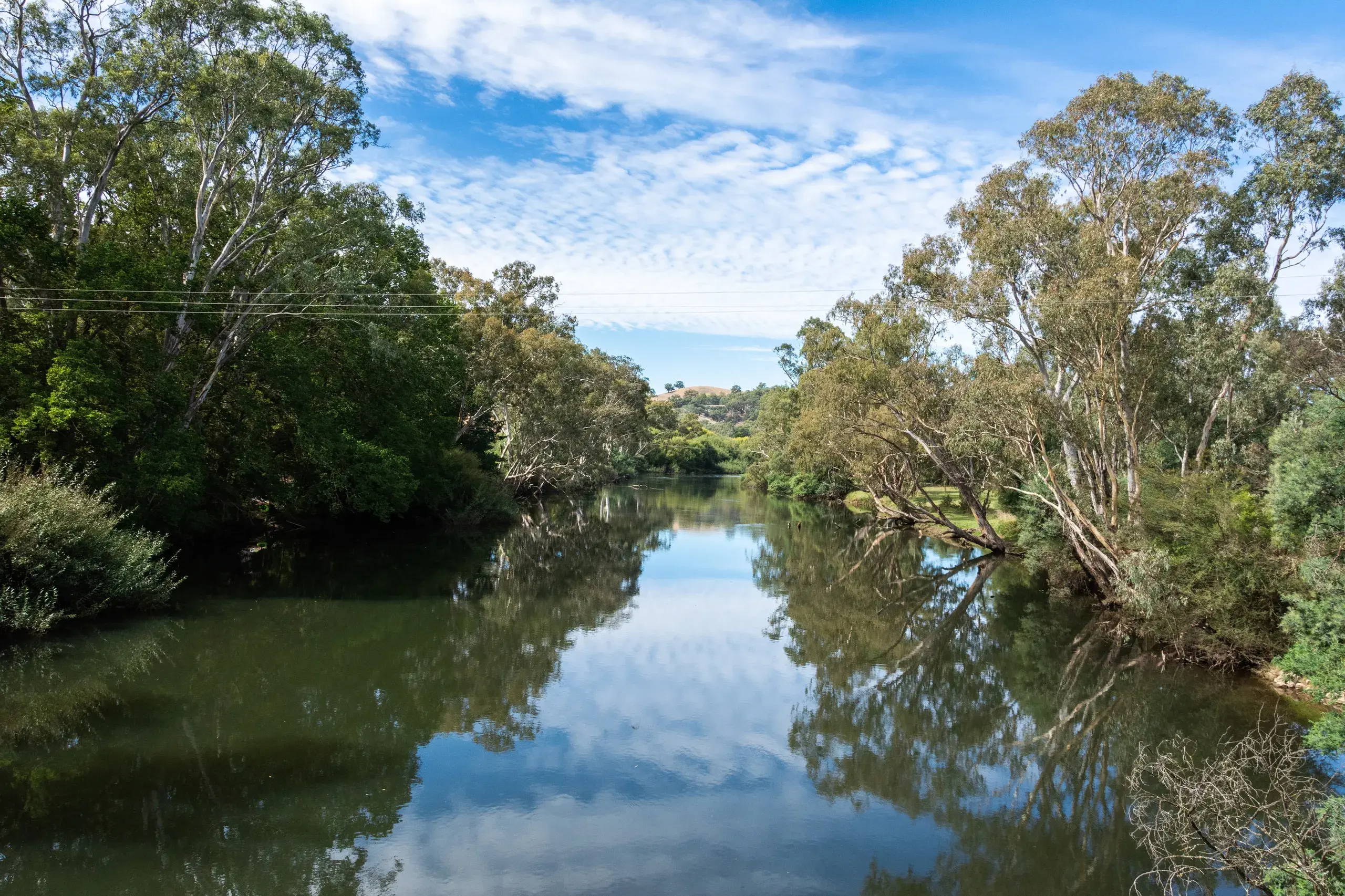
The Murray Darling Basin Authority has released its Basin Plan Review discussion paper and is urging Basin communities – which include those along the Lachlan River – to be part of the consultation.
The authority's chief executive, Andrew McConville, says the plan has delivered real benefits, but more needs to be done.
The discussion paper explores an initial assessment of sustainable diversion limits, water for the environment, water quality, native fish decline, floodplain and wetland health.
“The Basin Plan has delivered real benefits, and we are starting to see improvements in some of the Basin’s most important rivers and wetlands,” Mr McConville said.
“But the evidence is also clear that climate change, ageing infrastructure, disconnected floodplains, declining native fish and poor water quality mean we need to do some things differently.”
Water already recovered for the environment has helped sites like BarmahMillewa Forest, the Lower Lakes and other Ramsar-listed wetlands, the paper says.
However it identifies challenges including that environmental flows cannot reach disconnected critical floodplains and wetlands due to physical constraints.
Recovery of native fish populations also needs healthy habitats, river connectivity, and pests and barriers to be managed.
The review also highlights the need to improve capacity to manage during dry times, as well as to advance First Nations peoples rights and interests, moving beyond consultation to genuine participation in water management.
Mr McConville said the Murray Darling Basin Authority had been transparent about the evidence gathered from governments, basin communities and industries, First Nations and scientists, to get to this point.
“We’ve used this evidence to propose ideas and actions for the future – now we want to know what the community thinks of that," he said.
“At this point it is a discussion, not a set of decisions. Nothing in the Review is yet settled, and we want to have a genuine conversation with communities, informed by their lived experience.”
Consultation on the Discussion Paper will run for 12 weeks, closing 1 May 2026.
At the conclusion of the public consultation period, the submissions will help inform the Authority as it develops the Review which is to be finalised and delivered to the Commonwealth Government before the end of the year.
Farmer, irrigator groups respond
Improving environmental outcomes in the Murray Darling Basin will take more than ‘just adding water’, farm and irrigation advocacy groups say.
The discussion paper acknowledges that environmental outcomes are influenced by a range of non-flow factors, National Farmers Federation water committee chair Malcolm Holm said.
Sustainable Diversion Limits (SDLs) are a cornerstone of the Basin Plan, and virtually all SDLs are being met including those for the Lachlan River.
“The science is telling us that where environmental problems persist, they are typically driven by invasive species such as carp, physical or rules-based constraints, and connectivity issues, not a lack of water,” Mr Holm said.
The NFF says the next phase of reform must focus on smarter management of the more than 3,000 gigalitres already returned to the environment to deliver better outcomes and value for money.
“After $13 billion and more than a decade of implementation, the focus must now be on optimisation and applying the lessons learned to improve outcomes," Mr Holm said.
“Farmers are ready to engage constructively on integrated catchment solutions as we edge toward a Basin Plan 2.0 that delivers for the both the environment and Basin communities.”
National Irrigators Council CEO Zara Lowien said any calls for more water from farmers would ignore the lessons of the past 14 years of implementation.
“It has become increasingly clear throughout Basin Plan implementation that solutions to improve our rivers whilst maintaining viable irrigation-water dependent communities, are more complex than assumed, over a decade ago,” she said.
“The current Basin Plan focused on reducing water usage by establishing new sustainable water limits – that’s been done, with one in three litres of irrigation water now out of production and sustainable limits in place – the next Basin Plan will need a different focus for today’s issues.”
Ms Lowien said irrigators would welcome further data and discussion to move forward on management options in the Basin.
“Further work to better understand drivers of environmental outcomes is about getting the right solutions, not just continuing with the past tools,” said Ms Lowien.
“We welcome further data and discussion to move forward on management options in the Basin, beyond the simple concept of 'just adding more water' during consultation.”
Options and future directions identified in the paper are:
Maximise the benefits of water for the environment: integrating environmental water deliver into river operations; identifying clear priorities for environmental water; enhancing First Nations involvement; and investing in complementary measures including pest control, fencing and revegetation.
Improve river connectivity in the northern Basin: Looking at the urgent need to improve river connectivity in the Barwon-Darling, Menindee Lakes and Lowe Darling (Baaka).
Improve floodplain and wetland health: proposing to continue NSW Murrumbidgee Reconnecting River Country program and extending the Gwydir Reconnecting Watercourse Country program, as well as increasing environmental flows in priority areas of the Goulburn and Murray.
Managing water quality: improving the Basin Plan water quality management plan.
Responding to native fish decline: priorities include fish-friendly river infrastructure, flow and connectivity, invasive species management, breeding and restocking and habitat restoration.
To read the discussion paper or snapshot, and to make a submission, go online to https://getinvolved.mdba.gov.au/2026basinplanreview