
PHOTO
74206.0
While many parts of the Central West have enjoyed welcome rain in recent months, residents are reminded that drought preparedness cannot wait until conditions begin to deteriorate.
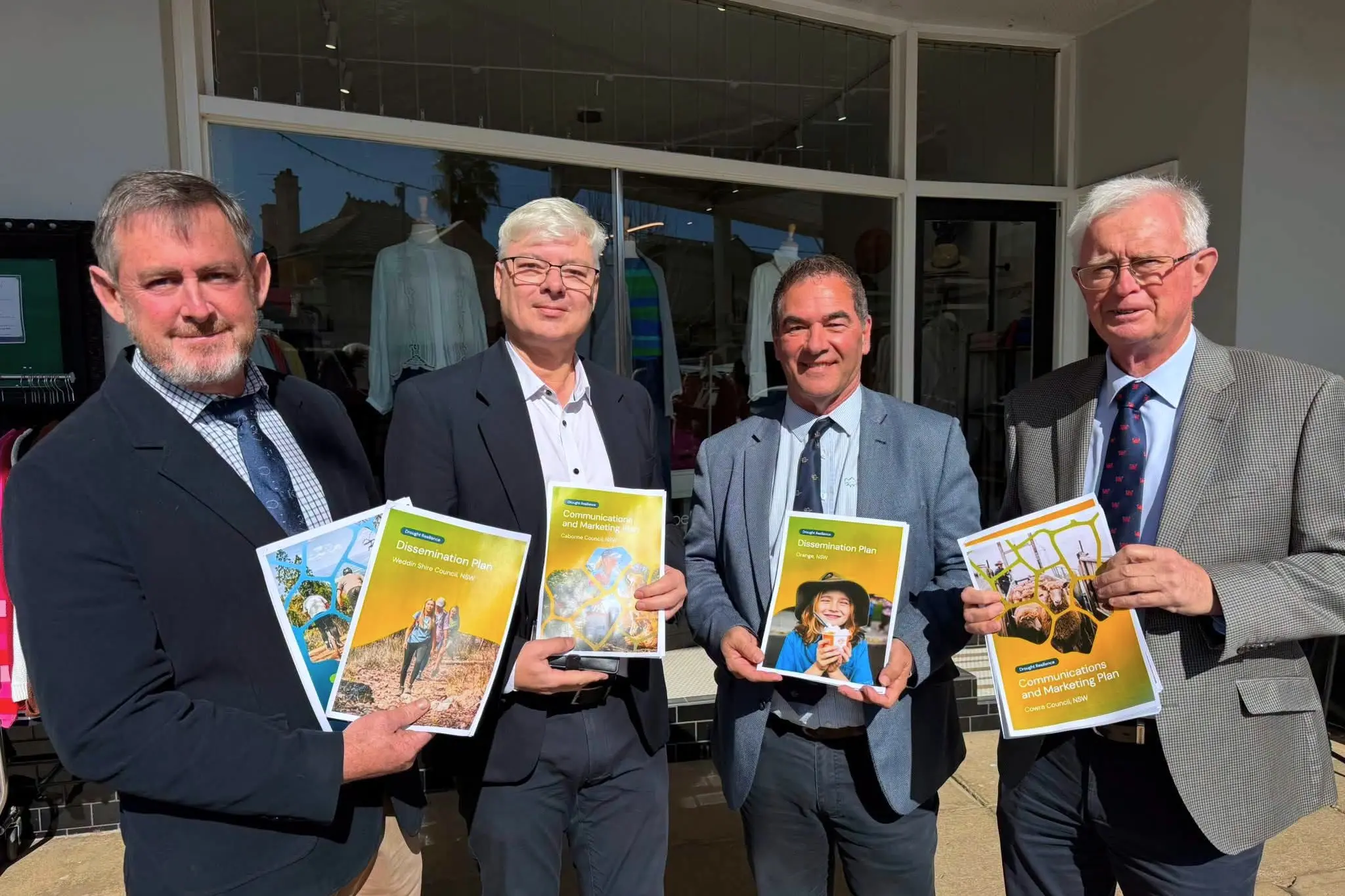
The completion of the Central West Regional Drought Resilience Plan has brought together Cabonne, Cowra, Orange, Blayney and Weddin councils in a coordinated effort to help communities prepare for future droughts before they arrive.
The project was developed through extensive consultation with businesses, farmers and community members across the region.
For both Cabonne and Cowra, where agriculture remains a major economic driver, the plan recognises that the impacts of drought reach far beyond farms and affect towns, businesses, services and community wellbeing.
Speaking at the project's completion event in Grenfell Cabonne councillor Andrew Rawson encouraged residents to explore the plan and the many local examples of resilience it contains.
"I hope people have a look at the plan," Cr Rawson said.
"It includes lots and lots of case studies, not only about the impacts of drought on particular people and particular businesses, but also what people are doing to build resilience to drought."
He said the stories highlighted practical actions that could help businesses and communities become better prepared for future challenges.
"The resilience message is really, really important. You've got to build businesses that are resilient to something that you might be within and not realise it."
Cr Rawson said drought differs from other natural disasters because it develops slowly.
"It's not like floods and fires that hit you really quickly. You can be in a drought and not realise it."
That gradual impact was one of the reasons consultation was so important in developing the plan.
The document identifies many of the challenges experienced during previous droughts across Cabonne and Cowra, including reduced farm production, declining business turnover, mental health pressures, social isolation, volunteer fatigue and increasing pressure on local services.
Cowra Mayor Paul Smith said the plan acknowledges a reality many people already understand.
"Drought doesn't stop at a shire boundary. It involves all of us," Cr Smith said.
"Farmers are very resilient people. They know they'll have good times and they'll have bad."
However, he said the broader community often feels the consequences of drought as agricultural businesses tighten spending.
"The rural community can turn off the tap. They can stop spending very quickly and that impacts the whole town."
Cr Smith said preparedness was not simply about water and farming. Mental health and community connection were equally important.
"We can try and help with mental health," he said.
"Even things like you have a golf day for farmers in a drought. They all come together. They all talk to one another. They're all in the same boat.
"There's strength in unity."
That focus on social resilience sits at the heart of the Regional Drought Resilience Plan which places significant emphasis on maintaining community connections and ensuring residents know where to find support services when times become difficult.
The project has produced a suite of practical resources that councils can use across the region, including business preparedness toolkits, communication resources and mental health information designed to connect residents with support services more quickly.
For Cabonne, where agriculture, food production and agribusiness remain major employers, the plan also highlights the importance of helping local businesses prepare for reduced economic activity during dry periods.
Community consultation found that many businesses feel drought's impacts indirectly through reduced spending, changing consumer behaviour and workforce pressures.
Similarly in Cowra, feedback gathered during the planning process identified uncertainty, financial stress and pressure on local infrastructure and services as major concerns during prolonged droughts.
Throughout the project, council leaders stressed the importance of regional cooperation.
By working together the five councils have been able to share resources, learn from each other's experiences and develop a coordinated response to a challenge that affects the entire Central West.
Cr Rawson said councils may not always be able to provide direct financial assistance, but they play an important role in helping communities navigate difficult circumstances.
"We can provide conduits for information, direct people to support services, help people access grants and advocate to state and federal governments when help is needed," he said.
The plan's central message is that drought is inevitable, but communities can be better prepared.
For Cabonne and Cowra shires that preparation means building stronger businesses, stronger support networks and stronger communities long before the next drought arrives.
This project was supported by the Australian Government's Future Drought Fund and the NSW Government.
For more information on the Future Drought Fund and the Regional Drought Resilience Planning Program, visit: www.agriculture.gov.au/agriculture-land/farm-food-drought/drought/future-drought-fund.
For more information on the Regional Drought Resilience Planning Program in New South Wales, visit: www.nsw.gov.au/rdrp.