
PHOTO
78399.0
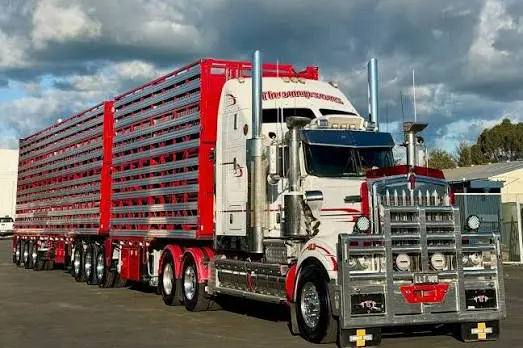
Diesel is the lifeblood of the transport industry, and for Cowra livestock carrier Nick Thompson, thousands of litres flowing through each truck every week mean even a small movement in price is impossible to ignore.
Mr Thompson, the third generation of his family involved in local business Thompson Cowra Livestock Transport, said diesel was easily the company's largest operating expense.
“Diesel in a transport company is our number one cost,” Mr Thompson said.
An individual truck can consume between 2,500 and 3,500 litres of diesel in an average week, meaning even relatively small increases at the pump can quickly add substantially to operating costs across a fleet.
For a truck using 3,000 litres a week, for example, a rise of just 10 cents per litre represents an additional $300 in fuel costs each week.
Mr Thompson said the price his business was paying had risen dramatically, describing current costs as close to double what they had previously been.
“I think it was around $1.50, $1.60, so it’s up towards $3 now,” he said.
“We’re not getting any extra bang for our buck, so to speak.”
While the higher price itself presents a challenge, purchasing fuel in large quantities also creates an immediate cash-flow demand.
Mr Thompson said the company received seven days of credit from its fuel supplier, meaning substantial fuel purchases needed to be paid within a short period.
“You’ve got seven days credit with our fuel supplier, so we’ve got to pay for that within seven days,” he said.
For Thompson Cowra Livestock Transport, one mechanism helps protect the business from being left to absorb rapidly changing diesel prices indefinitely — a fuel levy.
The business monitors the terminal gate price at the beginning of each week and adjusts the levy in response.
“The beauty with our industry, though, with the livestock industry, is that we have got a fuel levy that we adjust weekly,” Mr Thompson said.
“We assess the terminal gate price every Monday and just assess our costs from there for our fuel, what we’re paying for it.”
That allows changes in diesel costs to be reflected relatively quickly in what customers pay for transport.
“We do absorb it to a certain extent,” Mr Thompson said.
“However, we can pass it on quite quickly.
“Every Monday we assess the fuel price and go from there.
“Our fuel prices are up and down with the fuel.
"It just follows what the fuel’s doing.”
While the company can purchase bulk diesel at its Cowra yard, long-distance livestock transport creates another layer of exposure.
Its trucks regularly travel interstate into Queensland, South Australia and Victoria, meaning drivers cannot always return to the yard before needing to refuel.
That leaves the business purchasing diesel at service stations and paying on-road pump prices.
“We’ve got the good thing that we’ve got bulk fuel price in our yard here, but we only get through our yard so often,” Mr Thompson said.
“We’ve still got to pay pump price on road quite a lot.”
The ability to quickly adjust a fuel levy has therefore become an important safeguard for the business.
Mr Thompson said transport companies without a similar mechanism could only absorb significant increases for so long before freight rates would have to rise.
“If that wasn’t the case, we’d only be able to absorb it for a certain amount of time before things went bad, or you’d have to pass it on,” he said.
At its most extreme, Mr Thompson said continuing to operate a truck when the freight rate did not cover its costs simply did not make business sense.
“If they can’t pass it on, at the end of the day it’d be cheaper for them to park their trucks and trailers in the yard,” he said.
“There’s no point driving out the gate and making a loss if you can’t pass your fuel cost on.
“If you haven’t got the ability to pass it on quickly, it’d be simpler just to park the trucks in the yard and just pay the costs in the yard.
“It would be cheaper than actually going to work every day and losing money.”
Those pressures have implications well beyond transport operators themselves.
Trucking connects almost every part of regional industry, from moving livestock and grain to delivering machinery, parts and other goods.
For livestock transport in particular, animals still need to move between farms, saleyards, feedlots and processors regardless of what diesel happens to cost that week.
Mr Thompson said his own business was comparatively well positioned because its fuel levy meant increases could be reflected relatively quickly.
His greater concern was for businesses and industries without the same ability to respond.
“It’s not as big of an importance to us simply because we can pass it on,” he said.
“It’s the other industries that can’t pass it on as quick as we can that I’m worried about, and they’d be worried as well.”
With each truck consuming between 2,500 and 3,500 litres every week, however, diesel remains a major consideration regardless of the levy.
The combination of large fuel requirements, short supplier credit periods and the need to buy fuel on the road means substantial amounts of money are continually tied up simply keeping trucks moving.
For Mr Thompson, the fundamental equation is straightforward: a transport business cannot continue sending trucks out if the cost of making the journey exceeds what it earns from the job.
As diesel prices rise, the ability to respond quickly becomes not simply a question of profitability, but of whether it remains financially viable for some operators to keep their trucks on the road.