
PHOTO
81883.0
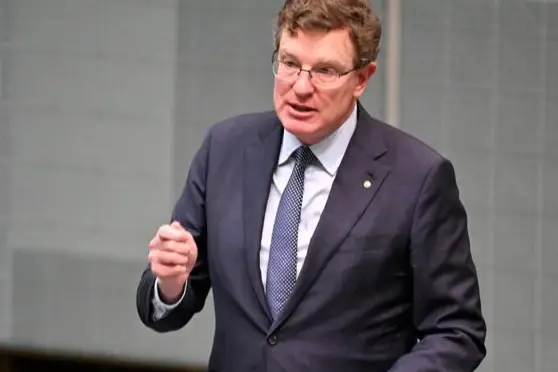
Independent Federal Member for Calare Andrew Gee has introduced legislation seeking greater control over advanced artificial intelligence and a pause on new AI data centre developments, raising questions about the technology's future and its impact on regional communities.
Mr Gee introduced the AI Kill Switch and Data Centre Control Bill 2026 into the House of Representatives on 7 September, calling for stronger safeguards to ensure artificial intelligence remains under human control.
The private member's bill proposes mandatory shutdown capabilities for certain advanced AI systems, alongside restrictions on new AI data centre construction and major expansions.
"Artificial intelligence offers extraordinary potential to transform productivity, medicine, defence and economic growth," he told Parliament.
"But as these models become exponentially more powerful, the risks grow in equal measure."
Mr Gee said Australia needed to consider whether it could maintain effective control over the technology as it continued to develop.
The proposed legislation also addresses the physical infrastructure required to support the rapid growth of artificial intelligence.
Data centres house the computer systems that store, process and manage large volumes of information.
However, their energy and water requirements have raised concerns about the potential effects on electricity costs, water security and surrounding communities.
Federal Member for Riverina Michael McCormack said communities across regional Australia were increasingly concerned about the rapid expansion of data centre proposals.
"There are a lot of concerns with the proliferation of data centres and AI, with three centres currently proposed in my own hometown of Wagga Wagga," Mr McCormack said.
"These proposed sites could be dotted across the countryside.
"We need to pause to consider the water and power usage effects on local communities."
Mr McCormack also questioned whether planning frameworks were keeping pace with proposed developments.
"Many of these projects have state significant development status and are being given a 'tick and flick' approval by offices in Macquarie Street, yet the development controls and local environment plans within councils are unable to keep up with the pace of these proposed developments," he said.
For regional NSW, where agriculture and reliable access to natural resources underpin many local economies, the debate raises questions about how future data centre developments should be assessed against competing community needs.
Mr Gee's bill proposes a moratorium on new AI data centre construction and major expansions until Parliament establishes the required safeguards and expressly ends the proposed restriction.
The measure would not automatically stop existing facilities from operating.
The bill's proposed controls would also require covered advanced AI systems to have mechanisms allowing them to be restricted, suspended or shut down, with provisions for government intervention in serious circumstances.
Independent Member for Fowler Dai Le, who seconded Mr Gee's motion, said the objective should not be to stop technological development but to ensure its benefits were shared.
"My concern is not about stopping the technology; it's about ensuring Australians are prepared for the changes it will bring and that technology develops in a way that serves Australians - all Australians," Ms Le told Parliament.
She also raised concerns about the potential impact of data centres' energy and water consumption on households and small businesses already dealing with rising living costs.
Ms Le said workforce preparation would be essential, including equipping students and existing workers with the skills needed as AI changes the way people work.
The AI Kill Switch and Data Centre Control Bill 2026 is a private member's bill and has not yet been scheduled for further debate in the House of Representatives.
The bill has not become law and its proposed AI shutdown provisions and moratorium on new AI data centres remain unenforced.
Its future will depend on whether it gains sufficient parliamentary support to progress through both houses.
For communities across the Central West, Riverina and other regional areas, the debate highlights the challenge of balancing the opportunities offered by artificial intelligence with concerns about water security, energy demand and local decision-making.